
Introduction
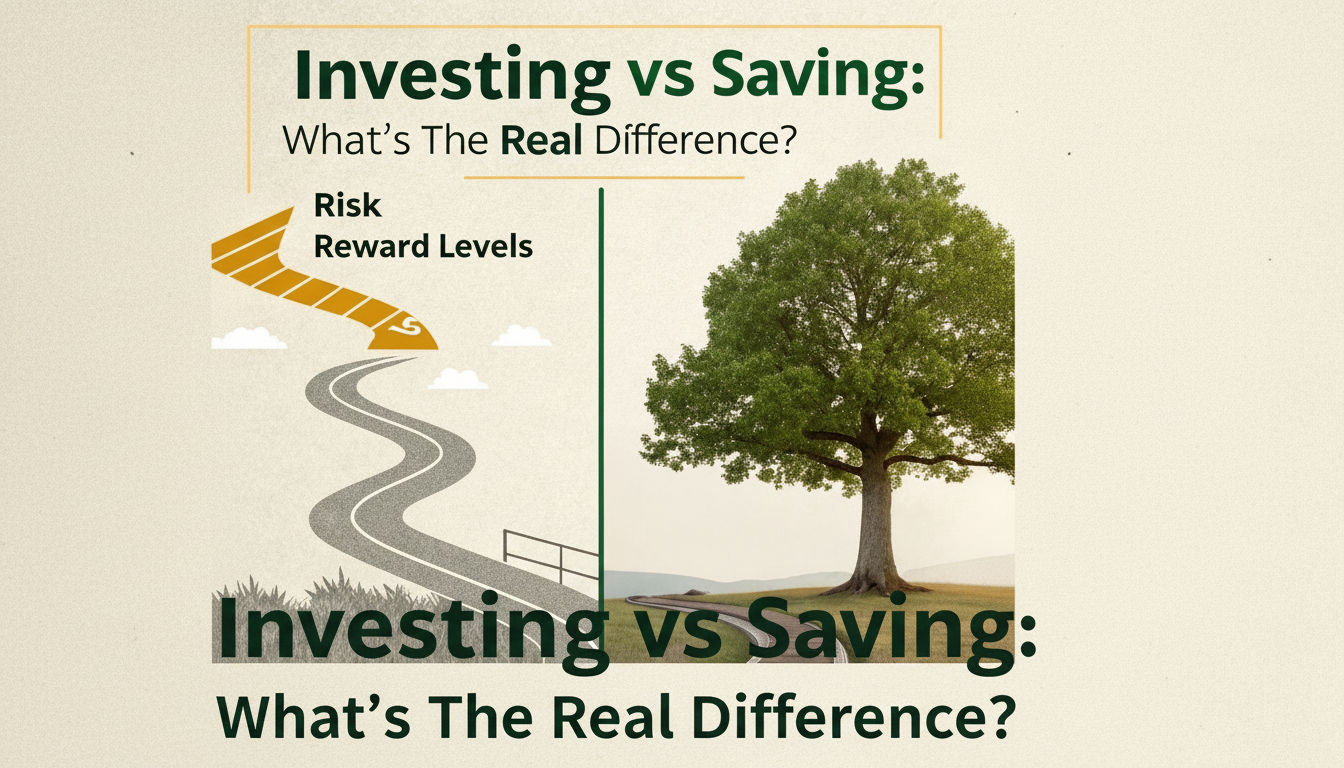
Saving protects money in the short term, while investing grows money over the long term by taking calculated risk. The real difference isn’t safety versus danger—it’s time horizon, purpose, and tolerance for fluctuation.
That distinction changes how beginners make decisions.
Many people are told to “save first, invest later” without understanding why. This article explains how saving and investing actually differ, when each makes sense, and how using the wrong one for the wrong goal quietly costs money over time.
What Saving Is Designed to Do
Safety and Liquidity First
Saving focuses on:

Capital protection
Easy access
Predictable value
Examples include savings accounts and emergency funds.
When Saving Makes Sense
Saving is ideal for:
Emergency expenses
Short-term goals
Money you can’t afford to risk
Using savings for long-term goals often means losing purchasing power to inflation.
What Investing Is Designed to Do
Growth Over Time
Investing accepts short-term ups and downs to pursue:
Higher long-term returns
Compounding growth
Participation in economic expansion
When Investing Makes Sense
Investing is appropriate for:
Long-term goals
Retirement planning
Wealth building
Investing rewards patience, not constant action.
The Core Differences at a Glance
| Factor | Saving | Investing |
| Time horizon | Short | Long |
| Risk | Very low | Moderate to high |
| Return potential | Low | Higher |
| Volatility | None | Normal |
| Inflation impact | Negative over time | Can outpace inflation |
From real usage patterns, beginners often overuse saving for goals that require growth.
Why Confusing Saving and Investing Causes Problems
Saving Too Much for Long-Term Goals
This leads to:
Stagnant money
Missed compounding
Falling behind inflation
Investing Money Needed Soon
This creates stress and forces bad timing decisions.
[Money-Saving Recommendation]
Match the tool (saving or investing) to the timeframe, not the emotion.
Information Gain: The “Purpose Test” (SERP Gap)
What most guides miss:
They explain differences but don’t explain decision framing.
Key insight:
Money should be categorized by purpose, not by fear or optimism.
Ask one question before deciding:
“When will I need this money?”
Soon → Save
Far away → Invest
This single test prevents most beginner mistakes.
UNIQUE SECTION — Beginner Mistake Most People Make
Beginners often keep long-term money in savings because volatility feels scary. Ironically, avoiding short-term fluctuation creates long-term risk through inflation erosion. Safety today can mean loss tomorrow.
How to Balance Saving and Investing Properly
Build a Safety Base First
Emergency savings reduce emotional investing mistakes.
Separate Buckets Clearly
Different accounts for:
Emergencies
Short-term goals
Long-term investing
Increase Investing Gradually
Confidence grows with understanding—not speed.
[Expert Warning]
Mixing purposes in one account leads to emotional decisions.
Suggested Video:
“Saving vs Investing Explained for Beginners (Real Examples)”
Educational, calm, beginner-friendly.
What is the difference between investing and saving?
Saving protects money short term; investing grows money long term.
Is saving safer than investing?
Short term, yes. Long term, inflation reduces savings value.
Should beginners invest or save first?
Save for emergencies first, then invest for long-term goals.
Can I lose money investing?
Yes, short term. Risk decreases with time and diversification.
Why is investing important?
Because savings alone rarely beat inflation.
Can I do both at the same time?
Yes—and most people should.
Conclusion
Saving and investing are not competitors—they’re partners with different jobs. When beginners understand why each exists and use them for the right purpose, money decisions become calmer, clearer, and far more effective.
INTERNAL LINK
