
Introduction
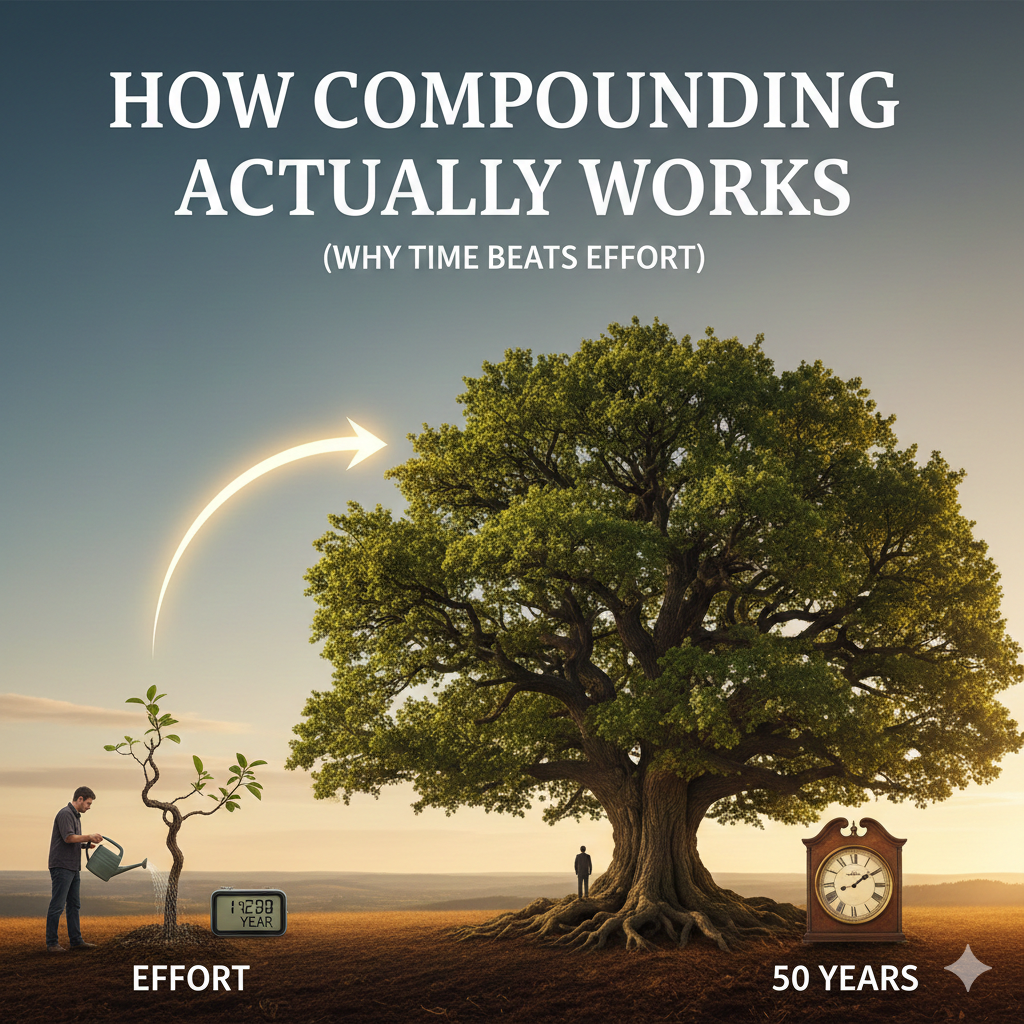
How Compounding Actually Works (Why Time Beats Effort) Compounding works by allowing returns to earn returns over time, creating exponential growth rather than linear progress. The longer money stays invested, the more powerful compounding becomes—even when contributions stay the same.
This is why time matters more than intensity.
Many beginners believe compounding is about high returns or complex strategies. It isn’t. Compounding rewards consistency and patience, not intelligence or activity. This article explains how compounding actually works, why it feels slow at first, and why most people underestimate its power.
What Compounding Really Means (In Plain Language)
Returns Earning Returns
Compounding happens when:

You earn returns
Those returns stay invested
Future returns are calculated on a larger base
Growth accelerates because the base keeps expanding.
Why Growth Isn’t Linear
Early growth looks small. Later growth looks dramatic—even with the same effort.
[Expert Warning]
Compounding feels boring early and unbelievable later. Most people quit before it becomes visible.
A Simple Compounding Example
| Year | Investment Value |
| Start | $10,000 |
| Year 1 | $10,700 |
| Year 5 | $14,000 |
| Year 10 | $19,700 |
| Year 20 | $38,700 |
Same money. Same effort.
Time did the work—not skill.
Why Compounding Feels Slow at the Beginning
Early Years Are Setup Years
In the beginning:
Gains feel insignificant
Progress feels invisible
Motivation is tested
This phase builds the foundation for later accelerationThe “Nothing Is Happening” Trap
Many beginners quit here—right before compounding starts to matter.
[Pro-Tip]
Compounding rewards patience more than motivation.
Factor Time Is the Most Important Compounding
Starting Early Beats Starting Big

Small amounts invested early often outperform larger amounts invested later.
Why Delays Are Expensive
Lost time can never be recovered, even with higher contributions.
[Money-Saving Recommendation]
Waiting for the “perfect time” costs more than starting imperfectly.
Common Compounding Killers Beginners Ignore
| Mistake | Why It Hurts |
| Frequent withdrawals | Breaks growth chain |
| Panic selling | Resets compounding |
| Overtrading | Interrupts continuity |
| Short-term focus | Prevents acceleration |
| Inconsistency | Weakens base |
From real usage patterns, behavior breaks compounding faster than market crashes.
Information Gain: Compounding Is Fragile (SERP Gap)
What most articles miss:
They describe compounding as automatic.
Key insight:
Compounding only works when money stays invested continuously.
Interruptions—selling, pausing, restarting—dramatically reduce outcomes. Compounding isn’t guaranteed; it must be protected.
UNIQUE SECTION — Beginner Misunderstanding Most People Have
Many beginners think compounding requires high returns. In reality, moderate returns held for a long time beat high returns held briefly. Time multiplies average results better than effort multiplies skill.
How Beginners Can Protect Compounding
Stay Invested During Boring Periods
Flat markets are compounding’s quiet builders
.Reduce Decision Frequency
Fewer decisions mean fewer interruptions.
Think in Decades, Not Years
Compounding doesn’t reward impatience.
[Expert Warning]
The biggest threat to compounding is not loss—it’s interruption.
Suggested Video:
“How Compounding Works Over 30 Years (Simple Visual)”
Educational, long-term focused, beginner-friendly.
FAQ Section
What is compounding in investing?
Compounding is when returns earn additional returns over time.
Why does compounding take time?
Because growth accelerates only after the base becomes large.
Is compounding automatic?
Only if money stays invested without interruption.
Can compounding work with small amounts?
Yes. Time matters more than size.
What stops compounding from working?
Selling early, withdrawing often, or inconsistent investing.
Why do most people underestimate compounding?
Because early results look slow and unexciting.
Conclusion
Compounding isn’t powerful because of math—it’s powerful because of time. The investors who benefit most aren’t the smartest or most active; they’re the ones who stay invested long enough for growth to accelerate. Protect time, protect consistency, and compounding will quietly do the rest.
internal link
How Investing Actually Works (Simple Beginner Guide)
