Introduction
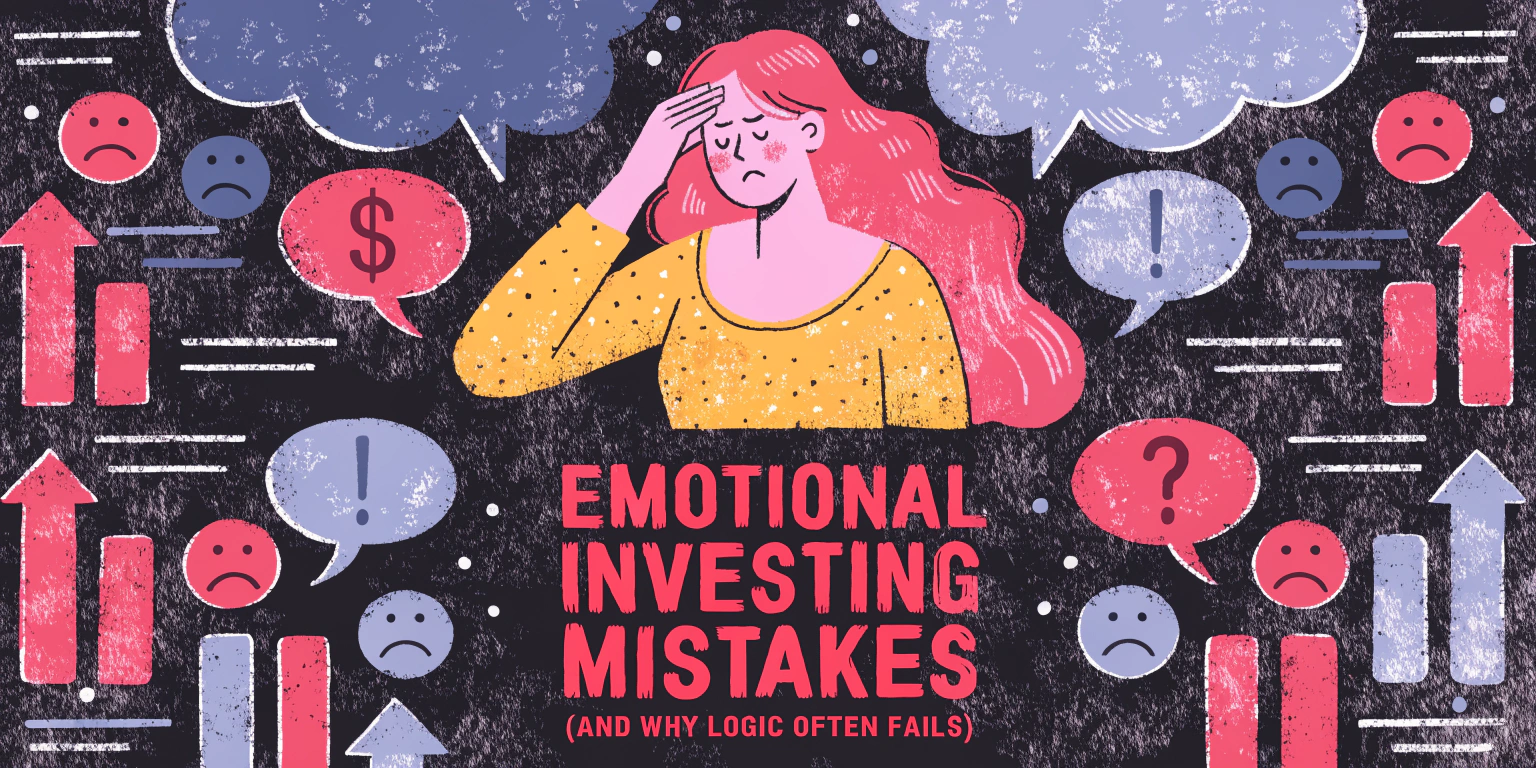
Emotional investing mistakes happen when fear, greed, or anxiety override logic during market uncertainty. Even investors who understand the “right” strategy often make poor decisions because emotions act faster than reasoning.
That gap between knowing and doing is the real problem.
Many investors believe mistakes come from lack of knowledge. In reality, most mistakes happen despite knowledge. This article explains why emotions overpower logic in investing, how these patterns repeat across market cycles, and what practical systems help reduce emotional damage over time.
Why Logic Breaks Down During Investing Decisions

The Brain Is Wired for Survival, Not Investing
Human brains evolved to respond quickly to threats. Market drops trigger the same fight-or-flight responses as physical danger—even though no immediate survival risk exists.
Information Overload Increases Emotion
More data doesn’t calm investors; it often amplifies anxiety and overreaction.
[Expert Warning]
The more frequently you check prices, the more emotional your decisions become—even if you consider yourself rational.
The Most Common Emotional Investing Mistakes
| Emotional Trigger | Resulting Mistake | Long-Term Damage |
| Fear | Panic selling | Missing recoveries |
| Greed | Chasing hot assets | Buying near peaks |
| Overconfidence | Oversized positions | Large drawdowns |
| Regret | Freezing decisions | Missed opportunities |
| Anxiety | Constant switching | Compounding failure |
From real usage patterns, investors rarely make just one emotional mistake—they repeat smaller ones continuously.

Fear-Driven Mistakes (Loss Feels Worse Than Gain)
Why Loss Aversion Dominates
Losses feel roughly twice as painful as equivalent gains feel good. This imbalance pushes investors to “stop the pain” prematurely.
How Fear Changes Decision Timing
Fear doesn’t eliminate decisions—it accelerates them, often at the worst possible moment.
[Money-Saving Recommendation]
Fewer emotional exits usually save more money than chasing better entry points.
Greed-Driven Mistakes (When Confidence Becomes Dangerous)
Why Greed Feels Logical at First
Rising markets reward recent behavior, creating a false sense of skill.
The Peak-Chasing Pattern
Investors often increase risk after most gains have already occurred.
[Pro-Tip]
When an investment feels “obvious,” risk is usually highest—not lowest.
Information Gain: Emotions Don’t Cause One Big Mistake — They Cause Many Small Ones
SERP Gap: Most articles focus on dramatic panic selling.
Key insight:
Emotional investing damage usually comes from repeated small actions—minor exits, reallocations, and hesitation—that quietly erode long-term compounding.
These micro-decisions rarely feel serious, but over years they outperform even large market crashes in total damage.
UNIQUE SECTION — Practical Insight from Experience
In practical situations, investors who reduce decision frequency outperform those who try to improve emotional control directly. Systems beat willpower. Fewer choices mean fewer emotional failures.
Common Emotional Mistakes + Practical Fixes
Mistake 1: Checking Prices Too Often
Fix: Schedule portfolio reviews monthly or quarterly.
Mistake 2: Reacting to Headlines
Fix: Separate news consumption from decision-making.
Mistake 3: Making Decisions in Isolation
Fix: Write decisions down before executing them.
[Expert Warning]
Emotional control improves when decisions are delayed, documented, or automated.
How to Reduce Emotional Investing Damage Long Term
Build Rules Before Emotions Appear
Pre-commitment removes pressure during stress.
Automate Where Possible
Automation reduces exposure to emotional triggers.
Focus on Process, Not Outcomes
Process control is achievable; outcome control is not.
Suggested Video:
“Why Smart Investors Make Emotional Mistakes (Behavioral Finance Explained)”
Educational, psychology-focused, no hype or signals.
FAQ Section
What are emotional investing mistakes?
They are decisions driven by fear, greed, or anxiety rather than long-term logic.
Why do emotions overpower logic in investing?
Because the brain prioritizes perceived safety over abstract future gains.
Can emotional investing be eliminated?
No—but its impact can be reduced with systems and rules.
Is panic selling the worst emotional mistake?
It’s one of the most damaging, but repeated small emotional actions cause more harm.
How often should I check my investments?
Less frequently than you think—monthly or quarterly is enough for most.
Do experienced investors still make emotional mistakes?
Yes. Experience reduces frequency, not vulnerability.
Conclusion
Emotional investing mistakes don’t happen because people are irrational—they happen because markets exploit human instincts. The goal isn’t emotional perfection; it’s reducing how often emotions get to decide. When systems replace reactions, long-term results quietly improve.
internal link
How to Avoid Emotional Investing Long Term (A Practical System)