Introduction
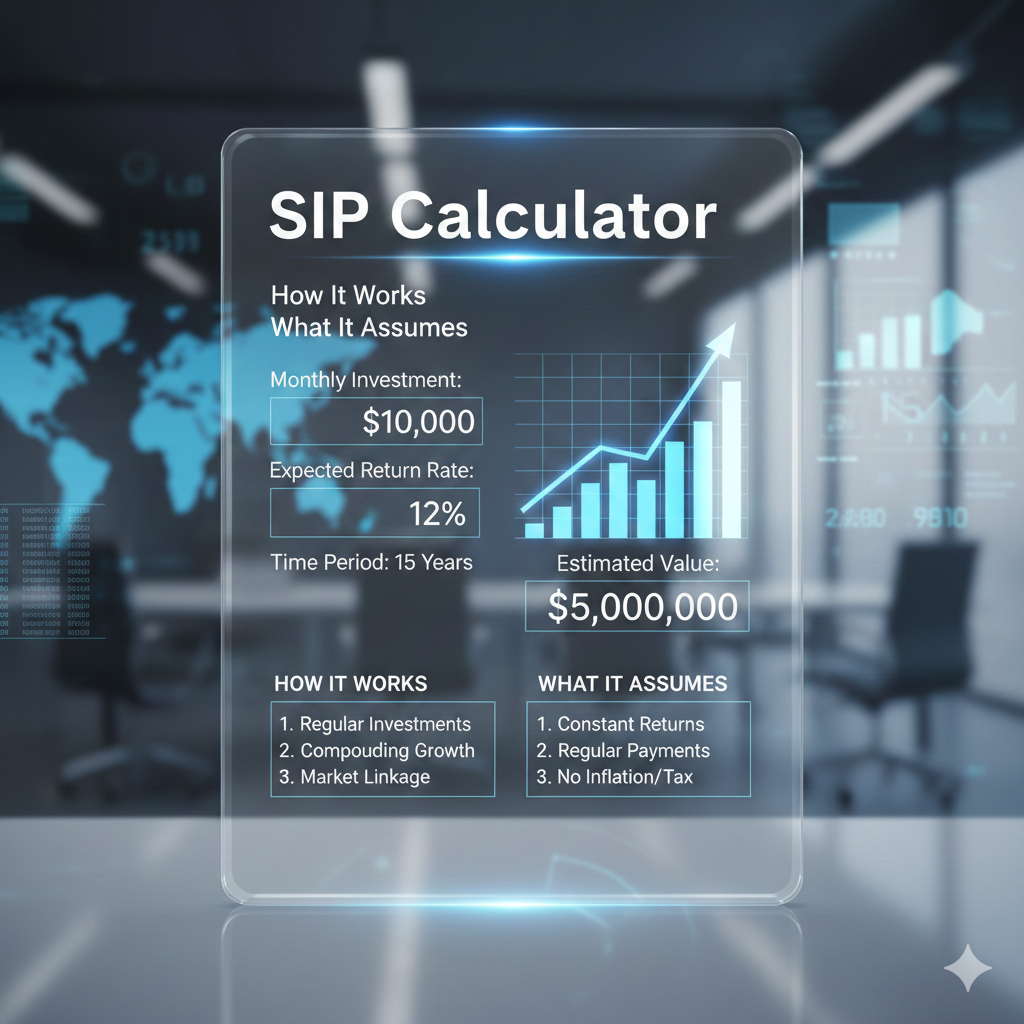
SIP Calculator Explained: A SIP calculator helps investors estimate the future value of their systematic investment plan based on monthly contributions, expected returns, and investment duration. Understanding how a SIP calculator works is essential for smart, long-term wealth creation.l.
Many investors treat SIP calculator outputs as predictions of future wealth. In reality, these tools are scenario builders, not forecasting machines. This article explains how SIP calculators actually work, the assumptions hidden inside them, and how to use them safely without building unrealistic expectations.
What a SIP Calculator Actually Does
Monthly Contribution Modeling
A SIP calculator assumes you invest the same amount every month without interruption. It does not naturally account for skipped payments, job changes, or cash-flow stress unless you manually adjust inputs.
Compounding Logic (Simplified)
Returns are averaged and compounded over time. Markets do not grow smoothly like calculator charts—but averages make projections easier to understand.
[Expert Warning]
SIP calculators assume discipline. Most investors struggle with consistency during volatile periods.

Core Assumptions SIP Calculators Rely On
| Assumption | Why It Matters | Real-World Reality |
| Fixed return rate | Smooth growth projection | Returns fluctuate |
| No missed SIPs | Optimistic behavior | Interruptions are common |
| Long holding period | Boosts compounding | Many exit early |
| No panic exits | Assumes calm behavior | Emotions interfere |
From real usage patterns, behavior gaps reduce final outcomes far more than small return differences.
Why SIP Projections Often Look “Too Good”
Averaging Hides Volatility
Ups and downs are flattened into a clean curve, creating false certainty.
Time Magnifies Optimism
Long timelines make numbers look impressive—even when assumptions are aggressive.
[Pro-Tip]
Always run SIP calculators using conservative return estimates first. Optimism should be earned, not assumed.
Information Gain: SIP Calculators Measure Habits, Not Outcomes
SERP Gap:
Most articles explain formulas but ignore human behavior.
Key insight:
SIP calculators are best used to compare contribution habits—not to predict final wealth.
Two investors using the same calculator can end up with very different results depending on:
Consistency during downturns
Emotional reactions
Willingness to stay invested
The calculator cannot model these differences.
UNIQUE SECTION — Real-World Scenario
Two people invest ₹10,000 monthly using the same SIP calculator:
Investor A: Continues SIPs during market drops
Investor B: Pauses SIPs during uncertainty
Same tool. Same inputs. Very different outcomes.
The difference isn’t math—it’s behavior.
How to Use SIP Calculators Correctly
Treat Outputs as Ranges
Think “possible outcomes,” not “future value.”

Test Multiple Scenarios
Run pessimistic, average, and optimistic cases.
Focus on Contribution Discipline
Consistency matters more than chasing higher assumed returns.
[Money-Saving Recommendation]
Don’t buy premium tools promising “accurate SIP returns.” No calculator can predict markets honestly.
Suggested video:
“How SIP Compounding Really Works (With Real Market Ups & Downs)”
Educational, long-form, no sales pitch.
FAQ Section
Are SIP calculator results guaranteed?
No. They are projections based on assumptions, not guarantees.
What return rate should I assume in a SIP calculator?
Conservative rates are safer for planning than optimistic ones.
Do SIP calculators include inflation?
Most do not unless stated explicitly.
Can SIP calculators be wrong?
They become misleading when assumptions don’t match real behavior.
Should beginners rely on SIP calculators?
Yes—for planning habits, not predicting exact wealth.
Why do actual returns differ from calculator results?
Because markets fluctuate and investor behavior changes over time.
Conclusion
SIP calculators are powerful planning tools—but dangerous forecasting tools. When used to understand habits and discipline, they add clarity. When treated as promises, they create false confidence. The key is knowing what the calculator shows—and what it cannot.