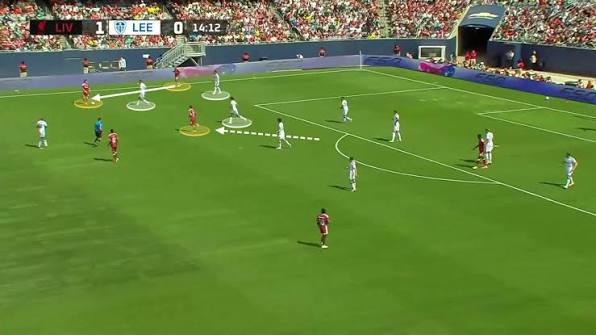
During the 2013–2014 Ligue 1 campaign, several possession-oriented sides placed heavy emphasis on short, intricate passing networks around the opposition penalty area to unlock deep defensive blocks. While this approach aimed to create high-probability shooting lanes through central overloads, it frequently produced severe structural risks during unexpected turnovers. Examining how central passing density exposed teams to rapid vertical counter-attacks reveals the fine line between calculated positional dominance and high-risk defensive exposure.
The Geometry of Over-Committed Central Passing Schemes
Attempting continuous short combinations within congested attacking corridors requires committing multiple midfielders and full-backs into advanced zones. During the 2013–2014 season, French clubs adopting positional possession pushed their defensive midfielders well beyond the halfway line to maintain passing connectivity around the eighteen-yard box. This forward commitment collapsed the natural vertical spacing of the team, leaving extensive open territory behind the attacking unit.
When an attacking move broke down in these congested central areas, the defending team immediately gained possession with forward-facing momentum while the attacking side remained stranded in backward-facing recovery positions. Because central passing networks require players to position themselves within five to ten meters of one another, a single intercepted pass bypassed up to five opposing players simultaneously. This structural flaw transformed routine midfield possessions into immediate numerical counter-attacks for the defending team.
Comparing Tactical Build-Up Profiles and Turnover Fatality
The extent to which an elaborate passing philosophy endangered a team depended entirely on their defensive rest-structure and passing tempo. Teams that moved the ball slowly around the perimeter of the box faced higher turnover frequencies because compact defenses had sufficient time to shift and jump passing lanes. The following data highlights the distinct trade-offs between various build-up methods and their resulting transitional vulnerabilities across the 2013–2014 French season:
| Build-Up Tactical Philosophy | Passes per Box Entry | Central Turnover Rate | Conceded Shots via Counter | Conceded Counter Goals |
| Over-Elaborate Central Passing | 6.8 – 8.5 | High (18%–22%) | 4.5 – 6.0 per match | Elevated across away matches |
| Direct Flank Delivery & Cutback | 3.2 – 4.5 | Moderate (12%–15%) | 2.8 – 3.8 per match | Average / Controlled |
| Patient Midfield Circulation | 5.0 – 6.2 | Low to Moderate | 2.0 – 3.0 per match | Low (Protected central axis) |
| Vertical Direct Transition | 1.8 – 2.6 | Variable (Long balls) | 1.5 – 2.2 per match | Minimal (Low block intact) |
The documented variations illustrate that high volume passing in the final third directly correlated with elevated counter-attacking concessions unless paired with elite counter-pressing athleticism. When teams executed intricate short passes without achieving deep box penetration, the resulting turnovers occurred in high-danger central corridors rather than harmless wide touchline areas.
The Cascade of Central Turnovers in Congested Zones
Turnovers occurring directly in front of the penalty area are fundamentally more dangerous than those conceded on the flanks because they provide the recovering team with immediate, unimpeded access to central running lanes. During this era of French football, counter-attacking underdogs specifically designed traps around the edge of their box, baiting playmakers into attempting low-percentage threaded passes through crowded defensive lines.
Mechanism of Rest-Defense Collapse During Mid-Possession Turnovers
The collapse of a team’s rest-defense follows an identifiable mechanical breakdown when short passing sequences are abruptly severed in the final third. Understanding this tactical breakdown demonstrates how spatial over-commitment directly causes structural failure at the back.
- The attacking team pushes both central midfielders into the final third to support short triangle combinations.
- A misplaced vertical pass is intercepted by a defending center-back stepping forward with aggressive momentum.
- The attacking players immediately around the ball are caught flat-footed, failing to execute an instantaneous counter-press.
- A single forward clearance finds a sprinting winger running unchecked into thirty meters of vacant midfield green space.
This operational sequence explains why possession dominance often produced deceptive match control. Even when a team controlled 65% of the ball, conceding two or three isolated central turnovers was sufficient to surrender fatal transitional chances to direct, athletic opponents.
Opponent Transition Profiles and Market Pricing Disconnects
Evaluating how effectively an underdog can punish elaborate passing structures requires analyzing the physical profile of their attacking transition. In the 2013–2014 season, clubs equipped with rapid wide forwards and vertical target men consistently outperformed their statistical possession shares against possession-heavy favorites. Analytical models that relied strictly on aggregate ball dominance regularly undervalued the lethal efficiency of direct counter-attacking setups.
When evaluating live market dynamics across a sophisticated online betting site, tracking how teams handle sudden changes of possession provides an actionable predictive edge. Analyzing pricing movements on ufabet เว็บตรง confirms that public markets frequently overvalue high possession volume while underestimating how easily an over-elaborate passing side can be compromised by a single decisive vertical transition.
Sequential Breakdown of Edge-of-the-Box Dispossession
The psychological frustration of failing to penetrate a compact defensive wall often compounds tactical vulnerability over the course of ninety minutes. As attacking teams become desperate to score, their passing tempo slows down, individual players take extra touches in congested spaces, and defensive positioning behind the ball deteriorates entirely.
The progression below outlines the typical tactical decline of an over-passing side facing a disciplined low block:
- Initial patient passing sequences fail to generate clear shooting opportunities against a packed penalty area.
- Attacking players begin forcing high-risk ground passes through narrow central passing channels.
- Central defenders push beyond the midfield circle to maintain spatial pressure, abandoning depth cover.
- An intercepted ball leads to a direct two-on-one counter-attack against an isolated, back-pedaling defender.
Deconstructing this recurring progression demonstrates that counter-attacking goals conceded by possession sides are not defensive accidents. Instead, they represent the predictable culmination of progressive territorial over-commitment paired with declining passing precision under spatial pressure.
Quantifying Risk-to-Reward Ratios in Low-Margin Encounters
In low-scoring competitions like Ligue 1, committing surplus outfield players to breaking down a low block carries an unfavorable mathematical risk-to-reward ratio. Scoring from an elaborate edge-of-the-box passing move requires pinpoint execution across multiple touches under intense physical pressure. Conversely, conceding a counter-attack from a central turnover grants the opponent a high-efficiency attempt against an unsettled goalkeeper.
When assessing strategic systems across alternative probability environments such as a modern casino destination, long-term success relies entirely on avoiding negative-margin decisions that carry asymmetric downside. Navigating high-variance game outcomes on a premier casino online platform demands the exact same conceptual discipline: measuring whether the potential reward justifies exposing the system to catastrophic downside when circumstances shift unexpectedly.
Structural Compensations: Tactical Fouling and Sweeper Goalkeeping
To mitigate the counter-attacking risks inherent in edge-of-the-box combinations, tactically astute teams implemented deliberate structural safety valves. The most effective method during the 2013–2014 season was the immediate execution of tactical fouls in the attacking half before the defending team could establish forward passing rhythm. By accepting minor disciplinary warnings, possession teams successfully reset their defensive shape.
Furthermore, deploying a proactive sweeper-keeper capable of reading long transitional passes allowed high-line defenses to extinguish counter-attacks before shots materialized. When an attacking side lacked both tactical fouling discipline and an aggressive sweeper-keeper, their commitment to intricate short passing inevitably led to high-volume concession of high-danger scoring chances.
Summary
The tactical dynamics of the 2013–2014 Ligue 1 campaign demonstrated that over-elaborate passing combinations outside the penalty box introduced profound transitional vulnerabilities. Committing excessive numbers forward to unlock stubborn defensive blocks routinely stripped possession teams of their central rest-defense, leaving vast open spaces for counter-attacking opponents to exploit. Accurately assessing these matchups requires looking beyond surface-level possession metrics to evaluate how turnover locations, transition speed, and defensive balance interact to dictate match outcomes.