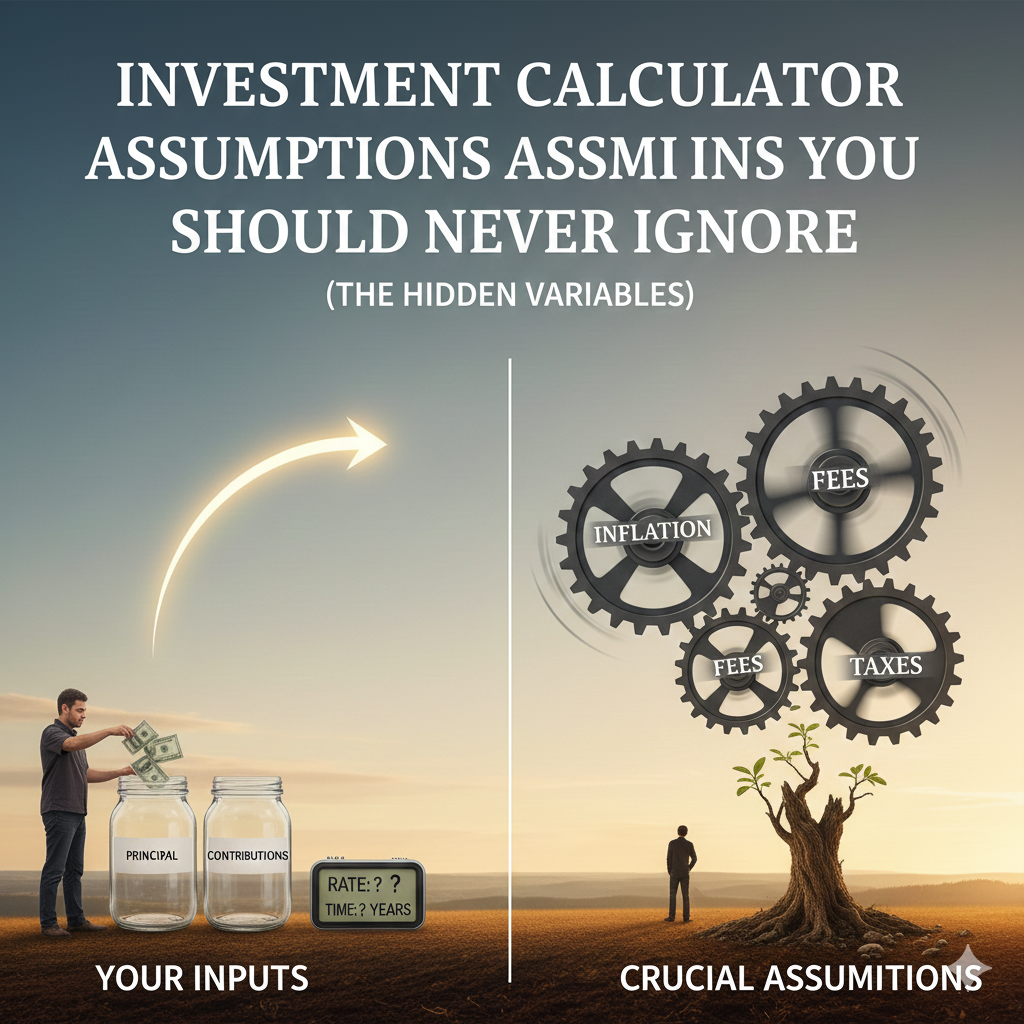
Introduction
Investment calculator assumptions include fixed returns, perfect consistency, and zero emotional mistakes. These assumptions simplify planning but rarely match real investor behavior, which is why calculator projections often differ from actual outcomes.
That mismatch causes more confusion than bad investing decisions.
Most investors don’t misuse calculators because they’re careless—they misuse them because assumptions are invisible. This article breaks down the key assumptions investment calculators rely on, why they distort expectations, and how to adjust your thinking so calculators help instead of mislead.
Why Investment Calculator Assumptions Matter More Than the Tool
Calculators Don’t Think — They Assume
Investment calculators don’t adapt. They simply apply math to the inputs you give them, assuming everything continues perfectly.
Assumptions Shape Outcomes
Change one assumption slightly, and long-term projections can shift dramatically.
[Expert Warning]
Calculator accuracy depends entirely on assumption realism—not on the tool itself.
The Most Common Assumptions Investment Calculators Make
| Assumption | What the Calculator Assumes | Real-World Reality |
| Fixed annual returns | Same return every year | Returns fluctuate |
| Perfect consistency | No missed contributions | Life interrupts plans |
| No emotional decisions | Investor stays calm | Fear & greed interfere |
| No major withdrawals | Money stays invested | Withdrawals happen |
| Stable inflation | Purchasing power unchanged | Inflation varies |
From real usage patterns, behavioral deviations reduce results more than market volatility alone.
Why Fixed Return Assumptions Are the Biggest Problem
Smooth Growth Is Not Real Growth
Markets grow unevenly. Calculators smooth this volatility into straight lines, which creates false certainty.
Sequence Risk Is Ignored
Returns early vs late in your investing journey matter—but calculators average them away.
[Pro-Tip]
Always assume lower-than-expected returns when planning. Optimism should be optional, not default.
The Behavioral Assumption Nobody Talks About
Calculators Assume You’re Emotionless
Most tools assume you:
Never panic sell
Never pause investing
Never chase performance
This is unrealistic.
Behavior Beats Math
Two people using the same calculator can get wildly different outcomes due to emotional decisions.
[Money-Saving Recommendation]
Build plans that assume imperfect behavior, not ideal discipline.
Information Gain: Assumptions Compound Faster Than Returns (SERP Gap)
What top articles miss:
They list assumptions but don’t explain how they compound negatively.
Key insight:
Small assumption errors repeated over long periods distort projections more than short-term market crashes.
For example:
Missing just a few early contributions
Overestimating returns slightly
Underestimating emotional exits
…can shrink final outcomes dramatically—without any obvious “mistake.”

UNIQUE SECTION — Real-World Scenario
Two investors use the same calculator:
Investor A: Assumes 12% returns, perfect discipline
Investor B: Assumes 7% returns, occasional interruptions
After 20 years:
Investor A feels disappointed
Investor B feels prepared
Realistic assumptions don’t reduce results—they reduce regret.
Common Mistakes + Practical Fixes
Mistake 1: Trusting Default Settings
Fix: Always customize assumptions manually.
Mistake 2: Using One Scenario Only
Fix: Run pessimistic, realistic, and optimistic cases.
Mistake 3: Ignoring Behavior Risk
Fix: Plan for missed months and emotional pauses.
[Expert Warning]
Default calculator settings are marketing tools—not planning tools.

How to Use Investment Calculators the Right Way
Treat Outputs as Ranges
Think possibilities, not promises.
Adjust Assumptions Over Time
Update inputs as income, goals, and behavior change.
Focus on Control Variables
You control:
Contribution size
Consistency
Time horizon
Not returns.
Suggested Video:
“Why Investment Calculators Lie (And How to Read Them Properly)”
Educational, long-form, behavior-focused.
FAQ Section
What assumptions do investment calculators make?
They assume fixed returns, perfect consistency, and no emotional mistakes.
Why are calculator projections often unrealistic?
Because assumptions rarely match real investor behavior.
Should I trust investment calculators?
Yes—for planning scenarios, not predicting outcomes.
Do calculators include inflation?
Most do not unless clearly stated.
How can I make calculators more realistic?
Use conservative returns and allow for interruptions.
Are paid calculators more accurate?
No. Accuracy depends on assumptions, not price.
Conclusion
Investment calculators aren’t broken—expectations are. When you understand the assumptions behind the numbers, calculators become powerful planning tools instead of sources of disappointment. Realistic assumptions don’t limit growth; they protect confidence.