Introduction
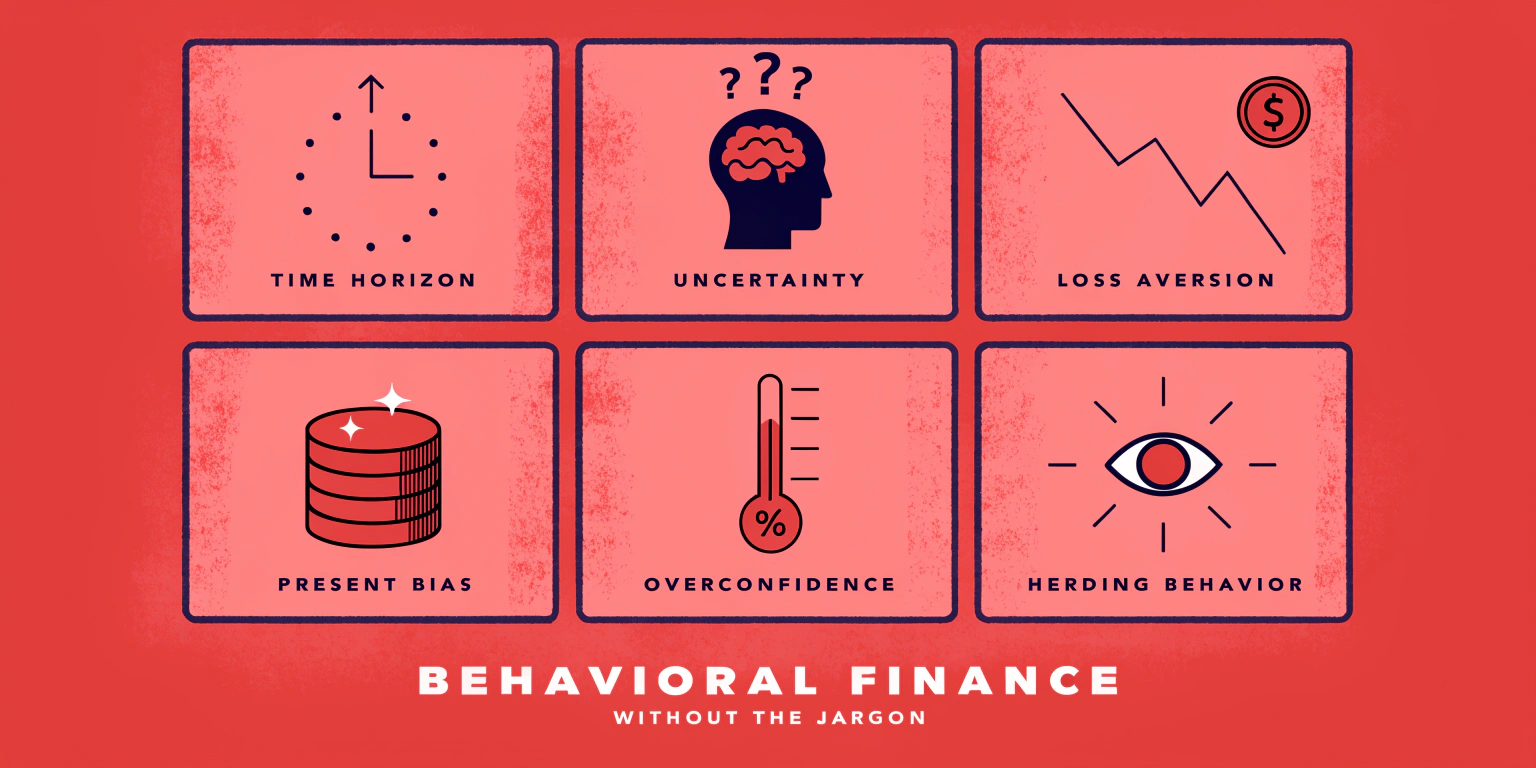
Behavioral Finance Explained (Without Jargon) Behavioral finance explains how psychological biases influence investing decisions, often causing people to act against their own financial interests. Understanding these patterns helps investors reduce emotional mistakes and improve long-term outcomes without complex theory.
That’s the simple version most people never hear.
Traditional finance assumes people act rationally. Real markets prove otherwise. This article explains behavioral finance in clear, everyday language—how common biases show up in real investing decisions, why they persist even among smart people, and how practical systems can reduce their impact over time.
What Behavioral Finance Actually Studies
Why Traditional Finance Falls Short
Classic models assume investors:
Process information perfectly
Make logical decisions
Remain emotionally neutral
Real investors don’t behave this way—especially under stress.
Behavioral Finance Fills the Gap
Behavioral finance studies:
Emotional responses
Mental shortcuts (biases)
Decision patterns under uncertainty
[Expert Warning]
Intelligence doesn’t eliminate bias. Awareness and structure reduce its impact.
The Most Common Behavioral Biases in Investing
| Bias | What It Means | How It Shows Up |
| Loss aversion | Losses hurt more than gains feel good | Panic selling |
| Confirmation bias | Seeking info that agrees with beliefs | Ignoring warning signs |
| Recency bias | Overweighting recent events | Chasing trends |
| Overconfidence | Overestimating skill | Oversized bets |
| Anchoring | Fixating on past prices | Poor buy/sell timing |
From real usage patterns, most investors experience multiple biases at once, not just one.
Why Biases Don’t Disappear With Experience
Experience Reduces Frequency, Not Vulnerability
Experienced investors still feel fear and greed—they just recognize it faster.
Stress Reactivates Biases
During volatility, even disciplined investors revert to instinctive behavior.
[Pro-Tip]
Bias management matters most when you feel confident—not when you feel afraid.
Common Behavioral Mistakes + Practical Fixes
Mistake 1: Trusting Gut Feelings During Volatility
Fix: Delay decisions; revisit them later.
Mistake 2: Consuming Too Much Market News
Fix: Separate information intake from action.
Mistake 3: Overreacting to Short-Term Performance
Fix: Evaluate outcomes over full cycles.
[Money-Saving Recommendation]
Reducing news exposure during market stress often saves more money than switching investments.
Information Gain: Biases Compound Like Returns (SERP Gap)
What most explanations miss:
Biases don’t cause isolated mistakes—they compound negatively over time.
Key insight:
Small biased decisions repeated regularly can reduce long-term returns more than a single major error.
Frequent hesitation, minor reallocations, and delayed re-entries quietly erode compounding—often without being noticed.
UNIQUE SECTION — Practical Insight from Experience
In practical situations, investors who design systems around bias prevention outperform those who try to “be more disciplined.” Willpower fades; structure endures.
Examples include:
Scheduled reviews
Automated contributions
Pre-written rules
How to Apply Behavioral Finance in Real Life
Reduce Decision Frequency
Fewer decisions mean fewer opportunities for bias.
Pre-Commit to Rules
Rules written in calm conditions protect you in stressful ones.
Track Behavior, Not Predictions
Notice how often emotions influence actions.
[Expert Warning]
If your strategy requires constant emotional control, it’s fragile.
Suggested Video:
“Behavioral Finance Explained Through Real Investor Mistakes”
Educational, psychology-focused, no hype or trading signals.
FAQ Section
What is behavioral finance in simple terms?
It studies how psychology affects financial decisions and why people act irrationally in markets.
Why do smart investors still make mistakes?
Because biases are emotional, not intellectual.
Can behavioral biases be eliminated?
No—but their impact can be reduced with systems.
Is behavioral finance only for beginners?
No. It applies to all investors, regardless of experience.
Which bias causes the most damage?
Loss aversion and overconfidence cause the largest long-term harm.
How can investors reduce bias impact?
By automating decisions, reducing noise, and using rules.
Conclusion
Behavioral finance doesn’t claim investors are foolish—it shows they’re human. The investors who succeed long term aren’t bias-free; they simply design systems that stop biases from making decisions. Understanding this difference turns psychology from a weakness into an advantage.