Introduction
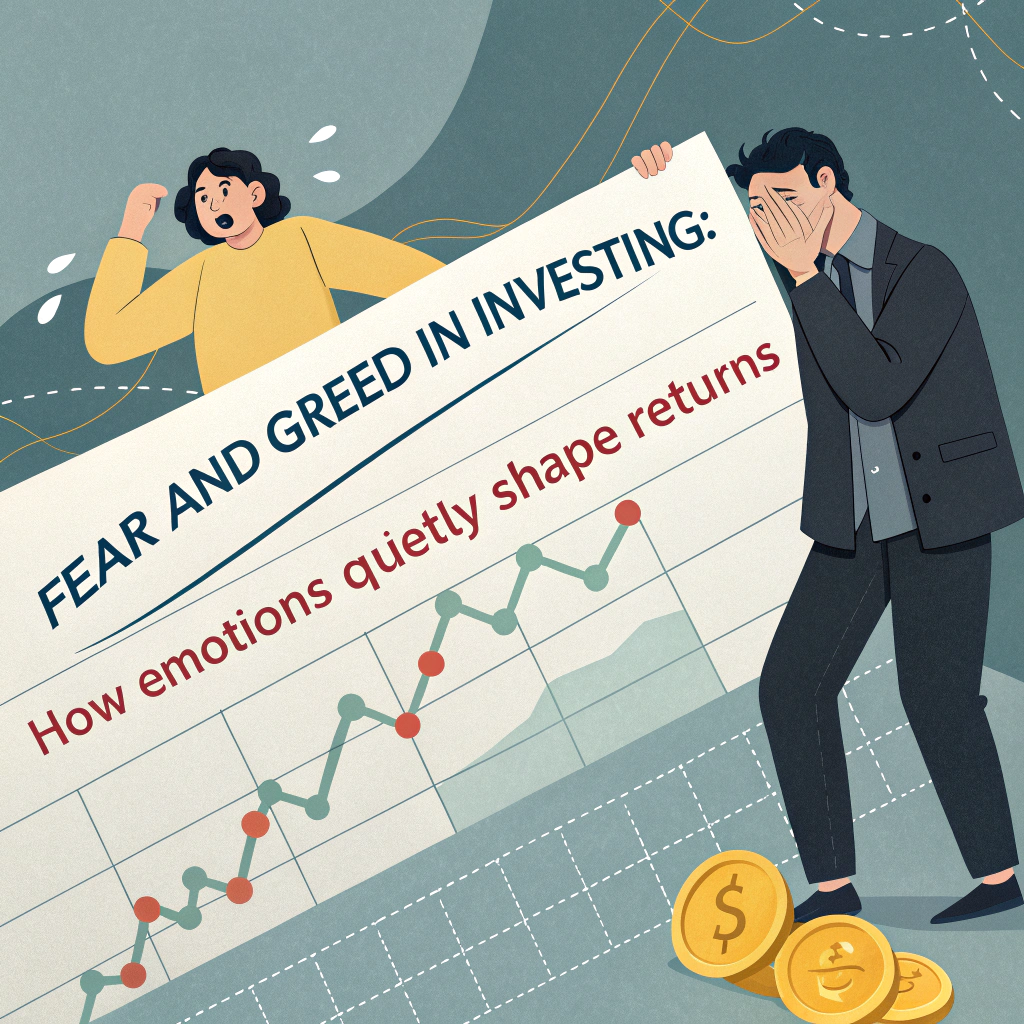
Fear and greed in investing drive many decisions that feel rational in the moment but damage long-term results. Fear pushes investors to exit too early, while greed encourages overconfidence and excessive risk at the worst times.
These emotions don’t arrive randomly. They move in cycles.
Most investors think emotions only matter during crashes or bubbles. In reality, fear and greed operate quietly across ordinary market conditions, shaping timing, position size, and patience. This article explains how both emotions work, why they’re so persuasive, and what realistic systems help keep them from controlling outcomes.
How Fear and Greed Actually Work in Markets
Fear Is About Uncertainty, Not Loss
Fear spikes when outcomes feel unclear—not just when prices fall. Sideways markets and conflicting news can trigger as much fear as crashes.
Greed Is About Certainty, Not Opportunity
Greed grows when outcomes feel obvious. Rising prices create the illusion of control and skill.
[Expert Warning]
Fear and greed are strongest when confidence is highest—right before conditions change.

The Fear–Greed Cycle (What Most Investors Miss)
| Market Phase | Dominant Emotion | Typical Investor Behavior |
| Early recovery | Doubt | Hesitation, staying in cash |
| Mid expansion | Confidence | Gradual risk increase |
| Late expansion | Greed | Chasing performance |
| Early decline | Denial | Holding without review |
| Deep decline | Fear | Panic selling |
From real usage patterns, investors often make their largest allocation changes near emotional extremes—precisely when risk is highest.
How Fear Hurts Investors Over Time
Selling for Emotional Relief
Fear-driven selling reduces anxiety immediately but converts temporary volatility into permanent loss.
Missing Recoveries
Many of the strongest market rebounds happen when fear is widespread and confidence is lowest.
[Money-Saving Recommendation]
Avoiding one fear-based exit can improve lifetime returns more than perfect timing ever could.
How Greed Quietly Increases Risk
Position Size Creep
As confidence grows, investors slowly increase exposure—often without noticing.
Ignoring Risk Controls
Greed reframes risk as “temporary noise” and delays necessary discipline.
[Pro-Tip]
When an investment feels “safe because it’s going up,” risk is usually rising—not falling.
Information Gain: Fear and Greed Cause Timing Errors, Not Just Big Mistakes
SERP Gap: Most content focuses on dramatic crashes or bubbles.
Key insight:
Fear and greed do the most damage through timing distortions—entering late, exiting early, and resizing positions at emotional extremes.
These errors compound quietly over years, even in otherwise calm markets.

UNIQUE SECTION — Practical Insight from Experience
In practical situations, investors who predefine acceptable discomfort perform better. They decide in advance what volatility they can live with and refuse to adjust plans based on feelings alone. Emotional acceptance reduces emotional reaction.
Common Mistakes + Practical Fixes
Mistake 1: Increasing Risk After Gains
Fix: Rebalance on schedule, not emotion.
Mistake 2: Freezing During Uncertainty
Fix: Use time-based reviews instead of price-based reactions.
Mistake 3: Seeking Constant Reassurance
Fix: Reduce portfolio checks during volatile periods.
[Expert Warning]
If your plan changes when your emotions change, it’s not a plan—it’s a reaction.
How to Manage Fear and Greed Long Term
Set Rules Before Markets Test You
Rules written in calm periods protect you during stress.
Automate What You Can
Automation removes emotion from execution.
Measure Behavior, Not Just Returns
Track how often emotions influence decisions.
[Money-Saving Recommendation]
Less action often preserves more capital than “doing something” during emotional periods.
Suggested Video:
“Fear and Greed Cycles in Investing Explained”
Educational, behavior-focused, no hype or trading signals.
FAQ Section
What role do fear and greed play in investing?
They influence timing, risk-taking, and decision-making—often harming long-term results.
Is fear worse than greed for investors?
Both are damaging; fear locks in losses, greed amplifies risk near peaks.
Can fear and greed be eliminated?
No—but their impact can be reduced with rules and automation.
Why do emotions peak at the wrong times?
Because price movement influences perception of risk and certainty.
How can I control emotional investing?
Reduce decision frequency, automate actions, and follow prewritten rules.
Do professional investors face fear and greed?
Yes. They manage it with systems—not willpower.
Conclusion
Fear and greed don’t disappear with experience—they just become quieter. Investors who succeed long term don’t suppress emotions; they design systems that prevent emotions from deciding. When rules replace reactions, returns stop being driven by feelings and start reflecting discipline.