Introduction
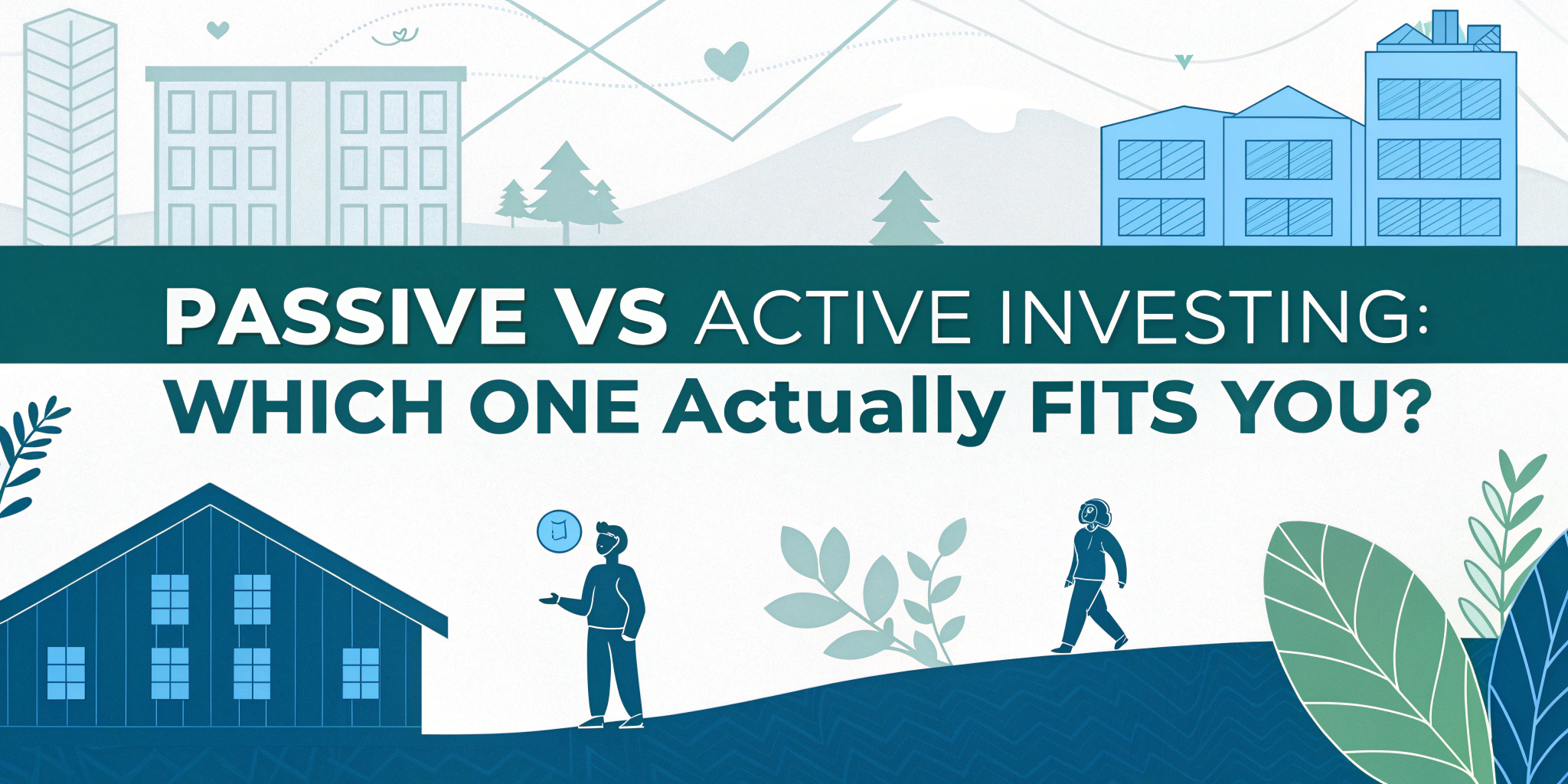
Passive vs Active Investing: Which One Actually Fits You? Passive investing aims to match market returns with minimal decisions, while active investing tries to outperform through frequent choices. For most people, the better option is the one that reduces mistakes and can be followed consistently—not the one that looks smartest.
That framing changes the whole debate.
Most comparisons obsess over performance charts. Real outcomes depend on behavior, costs, and decision pressure. This article breaks down both styles the way they operate in real life, not how they’re marketed.
What Passive Investing Really Means (Beyond the Label)

Fewer Decisions by Design
Passive investing focuses on broad exposure and long holding periods. The goal isn’t to be right often—it’s to avoid being wrong repeatedly.
Where Returns Come From
Market growth over time
Compounding
Low friction (fees, taxes, time)
[Expert Warning]
Passive investing fails when investors panic during downturns. The strategy is simple—the behavior isn’t.
What Active Investing Actually Requires
Continuous Judgment Calls
Active investing demands ongoing decisions about:
What to buy or sell
When to act
How much risk to take
The Hidden Costs
Beyond fees, active investing carries:
Time costs
Emotional strain
Decision fatigue
Small errors compound quickly when actions are frequent.
[Pro-Tip]
If a strategy requires constant monitoring, assume it will compete with your job, family, and attention.
Side-by-Side Reality Check
| Factor | Passive Investing | Active Investing |
| Decision frequency | Low | High |
| Time required | Minimal | Significant |
| Costs & taxes | Generally lower | Generally higher |
| Stress level | Lower | Higher |
| Skill dependency | Low–Moderate | High |
| Consistency needed | High | Extremely high |
From real usage patterns, most underperformance comes from over-decision, not poor asset selection.
Common Mistakes + Practical Fixes
Mistake 1: Assuming Passive Means “No Thinking”
Fix: Set rules in advance for rebalancing and reviews.
Mistake 2: Trying Active Investing Without Systems
Fix: Don’t trade without written rules and limits.
b: Switching Styles After Underperformance
Fix: Judge strategies over full cycles, not months.
[Money-Saving Recommendation]
Frequent trading often increases taxes and fees quietly—reducing net returns more than most investors expect.
Information Gain: Decision Frequency Is the Real Divider
SERP Gap: Most articles compare returns, not decision load.
Here’s the missing insight:
Strategies with fewer required decisions outperform for most people because they minimize opportunities to make emotional mistakes.
Active strategies can outperform in theory, but only when execution is near-perfect—rare in everyday life.
UNIQUE SECTION — Practical Insight from Experience

What experienced investors discover is that reducing decisions improves results more than improving predictions. Passive investing wins for many because it limits self-sabotage, not because markets are easy.
Which Style Fits Which Person?
Passive Investing Fits You If:
You prefer simplicity
You have limited time
You value consistency over excitement
Active Investing Fits You If
You enjoy analysis and tracking
You can commit daily attention
You accept frequent losses and drawdowns
[Expert Warning]
Choosing active investing for excitement rather than process is a fast path to burnout.
Suggested Video:
“Passive vs Active Investing: Behavioral Differences Explained”
Long-form, educational, experience-based (no hype).
FAQ Section
Is passive investing better than active investing?
For most individuals, yes—because it reduces costs and emotional mistakes.
Can active investing outperform passive?
Yes, but it requires skill, discipline, and consistency that most people underestimate.
Is passive investing truly risk-free?
No. Market risk still exists; behavior determines outcomes.
Can beginners try active investing?
They can, but should start small and track decisions carefully.
Does passive investing mean buying once and forgetting?
No. Periodic reviews and rebalancing still matter.
Why do many active investors underperform?
Because frequent decisions amplify errors, costs, and stress.
Internal Linking
investment strategies that actually work long term
Conclusion
The passive vs active debate isn’t about intelligence—it’s about alignment. The best strategy is the one you can follow when markets are boring, volatile, or uncomfortable. For most people, fewer decisions lead to better outcomes.